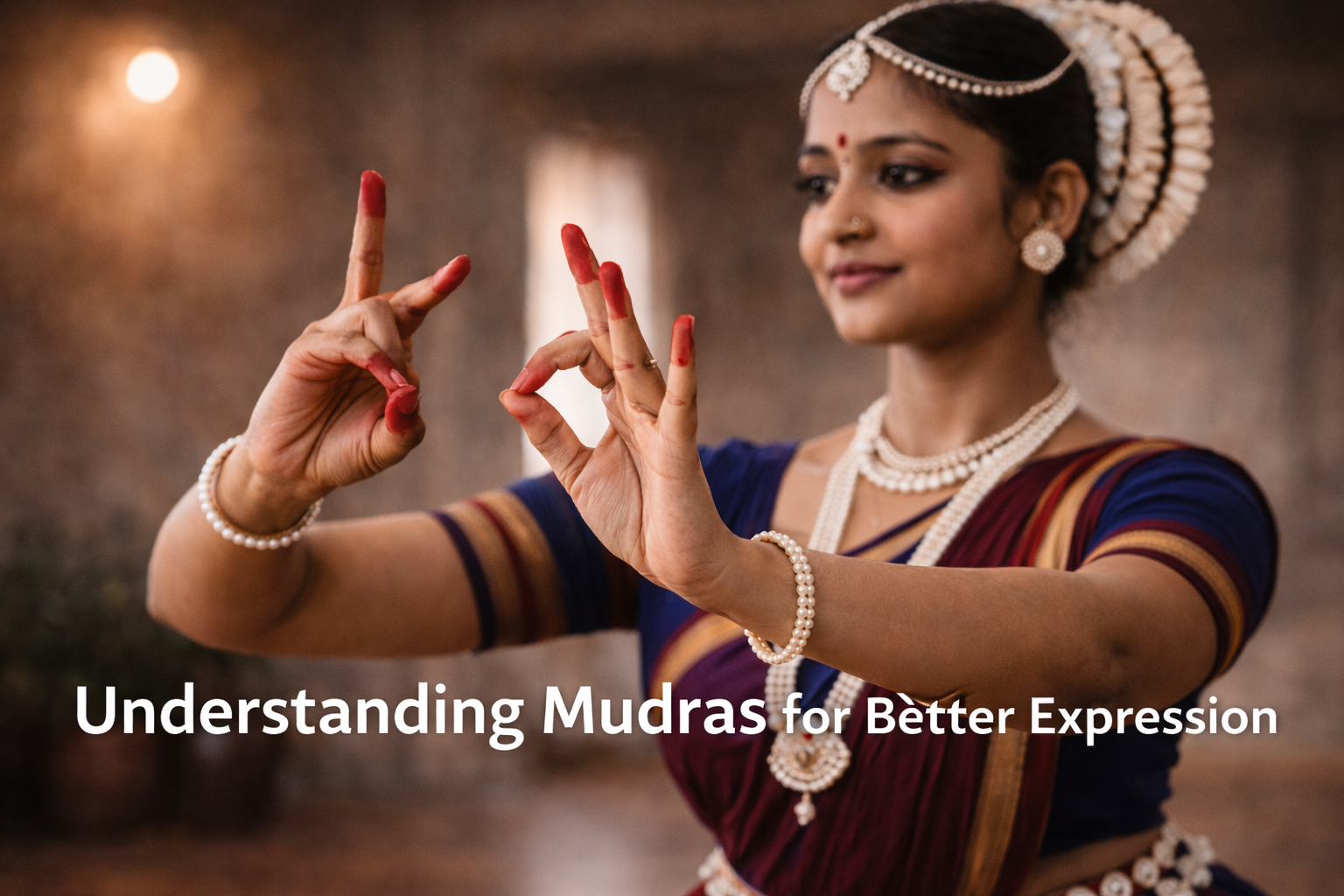
They speak when words are not allowed. They tell stories when the dancer stays silent. If you have ever watched an Odissi dancer and felt chills, it was not only the footwork. It was the expression.
In this guide, you will learn what mudras really are, why they matter so much in Odissi, and how beginners can use them to improve expression quickly.
What Are Mudras in Odissi Dance?
Mudras are symbolic hand gestures used in Indian classical dance to communicate meaning.
They represent:
- Objects (flower, moon, river, fire)
- Emotions (love, fear, devotion)
- Actions (walking, offering, praying)
- Animals and birds
- Divine beings and spiritual concepts
Mudras allow a dancer to create complete storytelling using only the body. In Odissi, they are especially important because the dance is deeply connected to temple tradition, devotion, and narrative expression.
Why Mudras Are Essential for Better Expression (Abhinaya)
Many beginners focus on steps first. Footwork is important, but without mudras dance becomes only movement.
Mudras give your dance:
- Clarity
- Meaning
- Elegance
- Rhythm support
- Emotional storytelling
- Classical authenticity
In Odissi, mudras are the bridge between technique and expression.
Mudras vs Hand Movements: What Is the Difference?
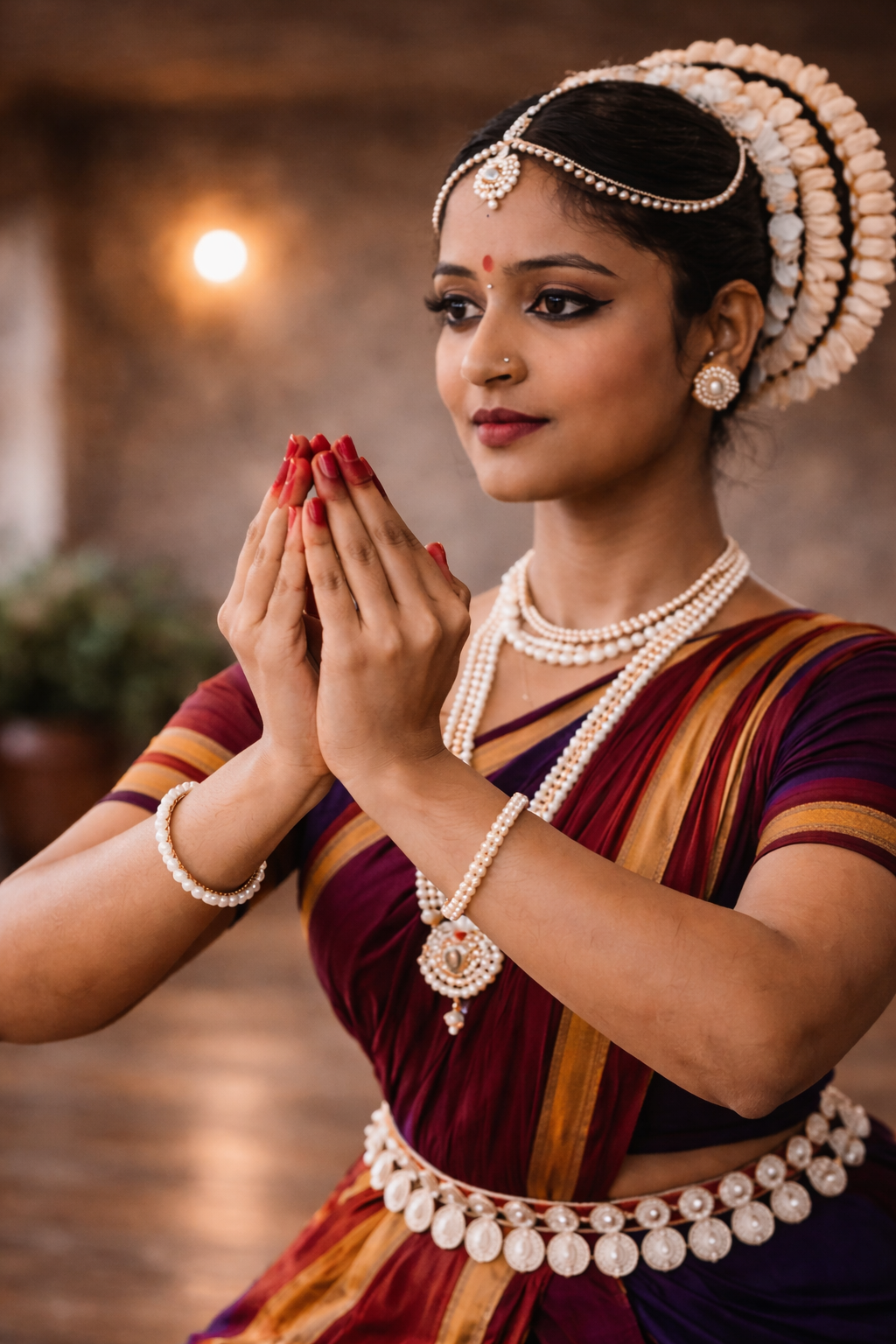
Not every hand movement is a mudra.
- Hand movement: A physical gesture that may look nice.
- Mudra: A gesture with specific classical meaning and rules.
This is why Odissi looks powerful: every movement is intentional, even finger placement.
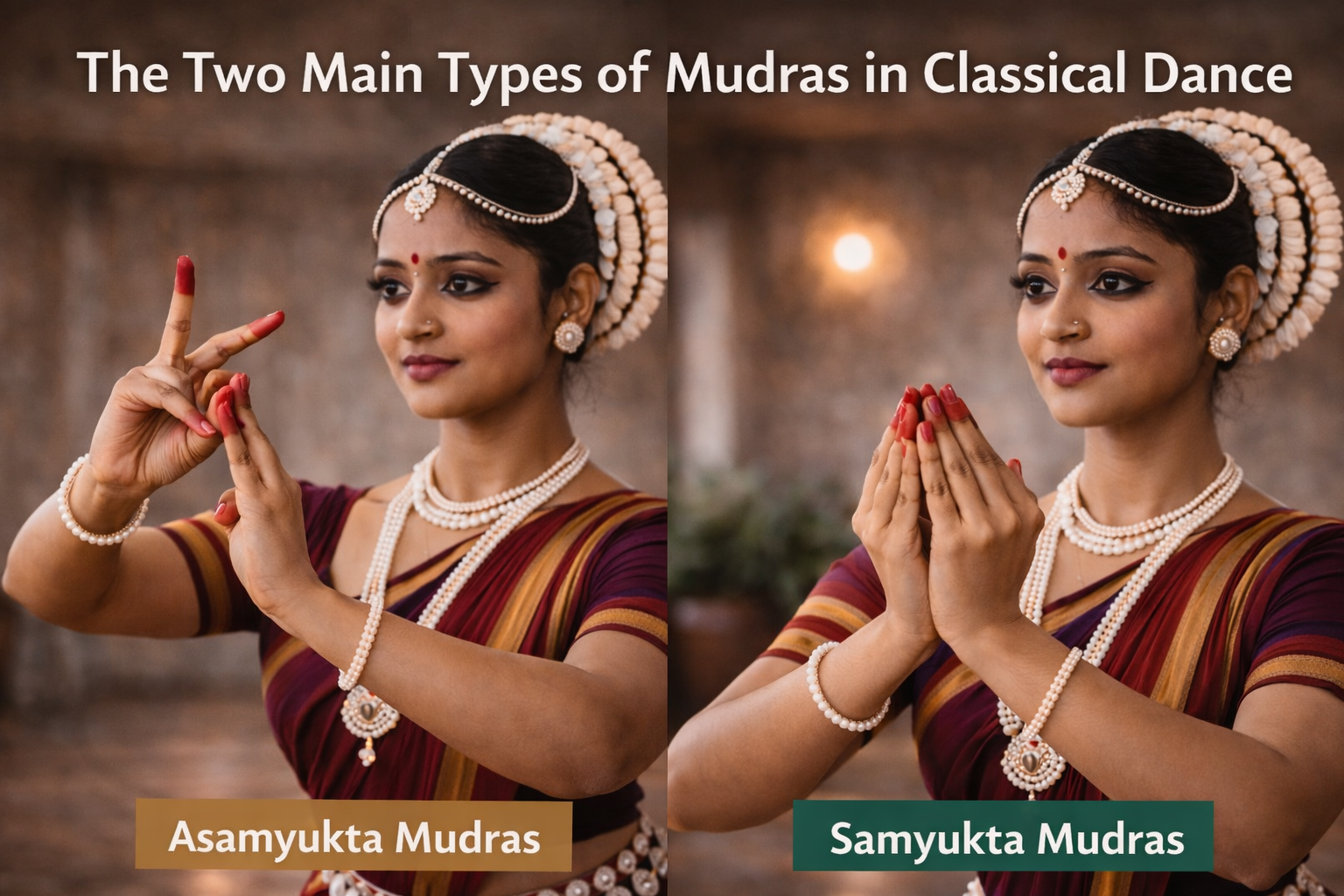
The Two Main Types of Mudras in Classical Dance
1. Asamyuta Hasta (Single-Hand Mudras)
Used for pointing, symbolic objects, subtle meanings, and storytelling detail.
Examples: Pataka, Tripataka, Ardhachandra, Mayura.
2. Samyuta Hasta (Double-Hand Mudras)
Used for prayers, offerings, nature symbols, divine forms, and dramatic meaning.
Examples: Anjali, Kapota, Karkata.
Why Mudras Matter More in Odissi Than You Think
Odissi is not only dance. It is a sacred art form.
Many Odissi compositions come from:
- Jayadeva's Gita Govinda
- Stories of Krishna and Radha
- Temple rituals and devotional poetry
- Traditional Odia culture
Mudras are how the dancer speaks the poem visually, without words.
5 Mudras Every Beginner Should Learn First
1. Pataka Mudra (Flag Gesture)
Meanings: blessing, stopping, sky, forest, wind, authority.
2. Tripataka Mudra (Three-Part Flag)
Meanings: crown, tree, lightning, separation, fire, temple roof.
3. Ardhachandra Mudra (Half Moon)
Meanings: moon, blessing, offering, feminine softness, beauty.
4. Mayura Mudra (Peacock)
Meanings: peacock, writing, applying tilak, decoration, sacred rituals.
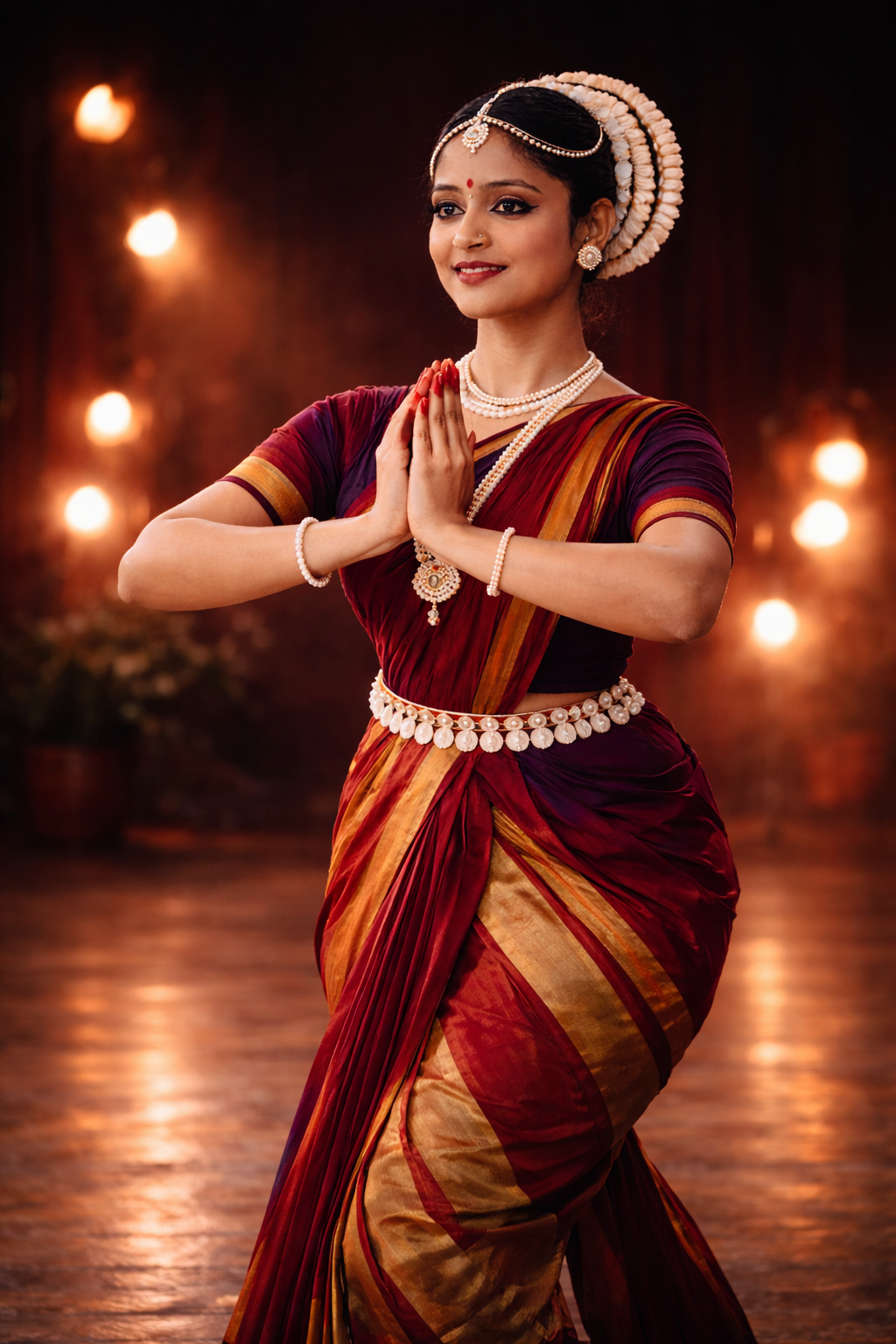
5. Anjali Mudra (Prayer Gesture)
Meanings: devotion, greeting, prayer, respect.
How to Practice Mudras Correctly (Without Hurting Your Hands)
Common beginner mistake: squeezing fingers too hard.
Mudras should look strong, but feel controlled and pain-free.
Practice tips:
- Practice slowly in front of a mirror
- Keep fingers long, not stiff
- Relax the wrist and keep line clean
- Maintain elegant elbow positioning
- Use breath to support expression
- Repeat daily for 5 minutes
Consistency beats long practice sessions.
Mudras Plus Eyes Equals Real Expression
Mudras alone are not enough. In Odissi, the eyes must support the mudra.
If hands show a flower, your eyes must see the flower. If hands show a river, your eyes must follow the flow. A dancer's gaze makes mudra believable.
Common Mudra Mistakes Beginners Make (And How to Fix Them)
- Fingers look dead: Extend fingers with life, not stiffness.
- Hands correct but face blank: Add feeling, otherwise expression is empty.
- Mudras too fast: Slow down so audience can read meaning.
- Awkward wrist bend: Keep wrist aligned with arm.
- Random-looking gestures: Learn meaning behind each mudra.
How Mudras Improve Stage Confidence
Mudras provide structure. When hands know what to do, beginners stop feeling lost.
Mudras help dancers:
- Look trained instantly
- Communicate clearly on stage
- Avoid awkward hand positions
- Control nervousness through discipline
They help the dancer step into character with confidence.
Mudras Are a Form of Meditation
In Odissi, mudras are not only technique. They train focus.
Correct practice develops attention, calmness, rhythm, emotional control, and spiritual presence.
Odissi does not only train the body. It trains the mind.
Mudras in Odissi: The Secret to Powerful Abhinaya
Abhinaya means expression, and expression makes Odissi unforgettable.
Perfect steps alone are not enough. Strong mudras with clear feeling can move hearts even in simple choreography.
How Long Does It Take to Master Mudras?
Mudras are like handwriting: awkward at first, natural with repetition.
- 2 weeks: Remember basic shapes
- 1 month: Hands begin to look classical
- 3 months: Smoother transitions and cleaner lines
- 6 months: Mudras become natural storytelling tools
- 1 year: Expressive maturity begins
Mudras are a lifelong refinement, and that is the beauty of classical dance.
Ready to Learn Mudras Properly?
If you want your Odissi to look authentic, expressive, and confident, mudras are not optional.
They are the soul of the dance.
Beginner tip: do not learn 30 mudras at once. Learn 5, master them, then build your vocabulary.
FAQ: Mudras for Beginners
Do I need flexibility to do mudras?
No. You need practice and finger control, not flexibility.
Do mudras have different meanings?
Yes. The same mudra can carry different meanings depending on context.
Are mudras only for Odissi?
No. Mudras exist in Bharatanatyam, Kathak, Kuchipudi, and other classical forms, but Odissi has its own usage style.
Final Thought: Mudras Make Odissi Come Alive
Odissi is a dance of poetry, and mudras are the alphabet of that poetry.
When your hands speak with clarity, your whole dance comes alive.
Start Mudra Training with Proper Guidance
Join our Odissi classes and learn mudras step by step with meaning, technique, and expressive depth.